
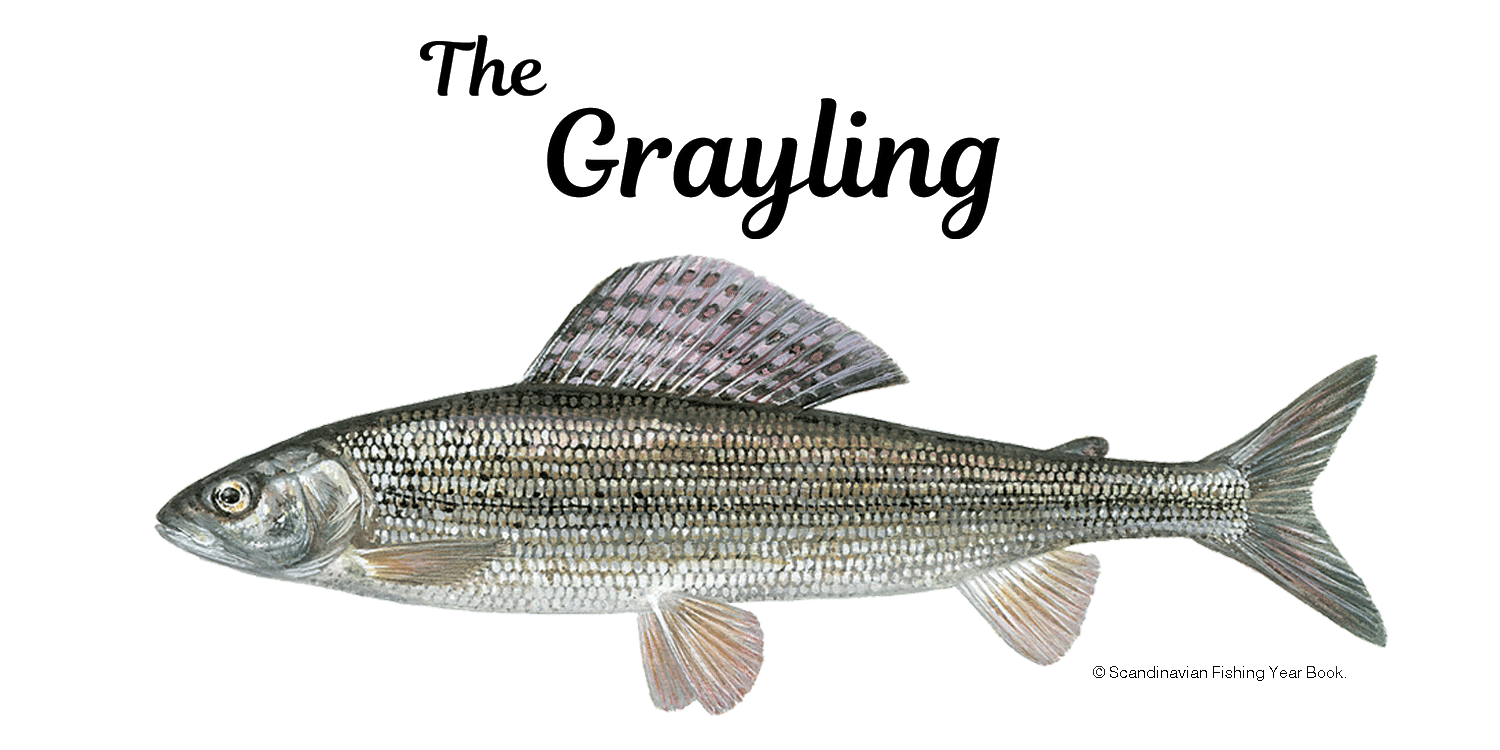
Whilst the Grayling is not native to Scotland, having first been introduced to the River Clyde in the mid nineteenth century from Derbyshire in England, subsequent introductions have led the grayling to successfully colonise several Scottish rivers and their tributaries.
These rivers include the Clyde, Tweed, Teviot, Nith, Annan, Ayr and Earn where the Grayling have not only survived but in the most part thrived.
The Tay catchment area including the rivers Isla, Earn and Tummel as well as the Forth catchment including the rivers Almond, Esk, Teith, Waters of Leith and the River Forth itself, have all in recent years seen further introductions.
Although Grayling can also be found in the lower River Garry they are entirely absent north of Pitlochry.
PROTECTION ORDER
N.B. - Protection Orders covering the Tay, Tummel, Tweed, Earn and Clyde are in force making it a criminal offence to fish for them without a permit.
"The GRAYLING SOCIETY"
Historically, despite belonging to the Salmonidae family, they were often seen as invasive vermin by many Scottish ghillies who at the time wrongly believed that the Graylings presence was detrimental to the existing stocks of native trout and salmon with whom they were considered to be in direct competition with for both food and territory.
Thankfully, largely due to the excellent work undertaken by the “The Grayling Society”, the Grayling is now rightly recognised as a truly wild and sporting adversary worthy of catching and protecting for future generations to enjoy.
APPEARANCE
In appearance the slender and streamlined "Lady of the Stream" displays a pewter coloured body with large scales, silvery underbelly and sports an unmistakably large sail-like dorsal fin. This huge dorsal fin, which displays four or five rows of black and red spots, shimmers with a variety of iridescent purple and violet hues.
The Graylings small head, large eyes and soft downturned mouth are perfectly adapted for bottom feeding on a diet of nymph, shrimp and various other assorted aquatic insects.
HABITAT
Grayling show a distinct preference for clear, cool, relatively fast flowing well oxygenated rivers and are particularly sensitive - more so even than the trout - to fluctuating temperatures and pollution.
One reason for this may be that the Graylings liver has a smaller weight to body mass ratio than the trout. This results in them being less able to detoxify any existing river pollutants so their presence in a river can be taken as a very good indicator of high quality water.
SPAWNING
With the onset of winter, shoals of Grayling gather in areas where suitable gravel beds form the river bed in preparation to spawn. This usually occurs between March and May although the exact timing is largely dependant on water temperature.
The male Grayling now begins his elaborate courtship rituals in an attempt to entice the hen fish into the redd - a small excavation in the gravel on the river bed - by displaying his now “colour enhanced” dorsal fin and with quivering fin movements spawning is initiated.
A hen fish of a couple of pounds weight may lay as many as five thousand eggs, often in individual batches, with the eggs subsequently being fertilised by several different males. Single hen fish have been known to mate as many as nine times with multiple males in the space of just a few minutes.
The yellowish eggs of two to three centimetres in diameter are now deposited in the gravel river bed to a depth of roughly five centimetres where they gently come to rest and settle amongst the pebbles.
ALEVINS
Once two to four weeks has elapsed the young alevins hatch and wriggling free from the gravel river bed that had given them protection and shelter, emerge and swim downstream.
For the first few critical months of their survival the young alevins seek shelter where the can in the slow flowing margins feeding on zooplankton, aquatic insect and freshwater shrimp. As they grow larger and bolder they begin to venture into faster flowing water feeding on water borne insects, fish eggs and even smaller fish.
GROWTH
In their first year the young Grayling, despite hatching later in the year, can attain a weight in excess of double that of either the salmon or the trout.
Within two to four years they will have reach sexual maturity and thereafter have an average lifespan of roughly five to six years with a Grayling of over two pounds considered a “specimen” fish whilst a fish of three pounds could be considered a fish of a lifetime.
The Graylings diet is not dissimilar to that of the trout however unlike the trout more than 75% of their diet is found either on or just off the bottom as they favour nymphs, caddis larvae and freshwater shrimp to surface flies.
ANGLING
This means that your first efforts should concentrate on fishing upstream weighted nymphs allowing them to trundle along on or near the river bed with the flow, just like a natural insect at the currents mercy.
During the summer months the Grayling will on occasions glide from the depths to intercept a well presented dry fly.
These rises from Grayling however are quite different from that of a trout as the Grayling, due to its underslung mouth, arrives through the water column to take the fly in a trajectory close to vertical.
Once the Grayling takes the surface fly the strike must be immediate as the Grayling will instantly spit the fly if it suspects something amiss.
One great technique involves the employment of a large surface dry fly with a small nymph or maggot suspended below, this allows you to simultaneously fish different water levels. With this method you must watch your “indicator” dry fly like a hawk and be prepared to strike immediately any deviation or unnatural movement is noted.
As the season progresses the angler stands a much greater chance of success employing wet fly and deep nymph tactics and with the first frosts of winter float fishing with brandling, maggot and sweetcorn is the way forward.
Once hooked the Grayling give a very good account of themselves, acrobatically twisting and turning with a corkscrew like motion using there bodies for leverage.
It is at these moments you will be glad to have chosen a light supple rod enabling you to cushion their spirited efforts to gain freedom.
